Joshua Yang
Scientist · Engineer · Builder
I study the hidden structure of biological systems—and build the tools that turn fundamental discoveries into practical ones.
Biology, machine learning, and translational science. From first principles to real-world systems.
Field Notes
Research notes, biotechnology, machine learning, and occasional personal essays—observations from the space between experiments, products, and institutions.
Protein information systemsBuilding the data layer for protein intelligence1 article1 abstract5 patent families
Biology has a data imbalance: genomic and transcriptomic data are abundant, while protein data remain sparse—even though proteins are the functional layer of biology. I encountered this directly through my work on organ injury and transplant rejection. Mass spectrometry revealed important biology, but its data were far harder to generate and process than DNA or RNA sequencing. That experience convinced me that biological AI needs a much richer protein data layer. My work in protein sequencing aims to close that gap by measuring protein identity at the scale required to build datasets, discover patterns, and train better models.
Foundational paper
Engineered helicase replaces thermocycler in DNA amplification while retaining desired PCR characteristics2022Nature Communications 13(1), 6312Research article
- Authors
- M. Gavrilov, J.Y.C. Yang, R.S. Zou, W. Ma, C.Y. Lee, S. Mohapatra, J. Kang, et al.
- Published in
- Nature Communications 13(1), 6312
Abstract
Rapid isothermal amplification of several kilo base pair linear DNA2022Biophysical Journal 121(3), 61aConference abstract
- Authors
- M. Gavrilov, J. Yang, C.Y. Lee, S. Mohapatra, T.W. Liao, S. Myong, T. Ha
- Published in
- Biophysical Journal 121(3), 61a
Patent families
Protein sequencing via coupling of polymerizable molecules2024–A molecular recording strategy for identifying proteins one molecule at a time.Granted + applications
Amino acid binding agents and their uses2025Recognition molecules designed to distinguish amino-acid identities during protein analysis.Application
Nanopore-based sequencing of peptides2025Reading peptide identity through the signals produced as molecules interact with a nanopore.Application
Methods and systems for processing polymeric analytes2023A system for preparing and interpreting single-molecule measurements of complex polymers.Application
Single-molecule peptide sequencing using xanthate reactive groups2025Selective amino-acid chemistry for extracting sequence information from individual peptides.Application
TransplantationMeasuring, predicting, and controlling organ injury12 articles2 reviews10 abstracts5 patent families
Organ injury was often detected too late and with tools poorly suited to continuous monitoring. Many cell-free DNA approaches relied on expensive sequencing of blood to distinguish donor-derived from recipient-derived fragments. We took a different view: urine comes directly from the kidney and serves as a molecular window into the transplanted organ. In this setting, urinary cfDNA came from the transplant, allowing inexpensive measurements such as total quantification to become informative without resolving two genomes. That insight led us to combine cfDNA, urinary biomarkers, gene expression, metabolomics, and immune biology—moving from measuring rejection toward predicting and ultimately controlling it.
Research articles
Polyclonal Regulatory T cell Therapy for Control of Inflammation in Kidney Transplants2017American Journal of TransplantationResearch article
- Authors
- S. Chandran, Q. Tang, M. Sarwal, Z.G. Laszik, A.L. Putnam, K. Lee, J. Leung, et al.
- Published in
- American Journal of Transplantation
A urine score for noninvasive accurate diagnosis and prediction of kidney transplant rejection2020Science Translational Medicine 12(535)Research article
- Authors
- J.Y.C. Yang, R.D. Sarwal, T.K. Sigdel, I. Damm, B. Rosenbaum, J.M. Liberto, et al.
- Published in
- Science Translational Medicine 12(535)
A urinary Common Rejection Module (uCRM) score for non-invasive kidney transplant monitoring2019PLoS ONE 14(7)Research article
- Authors
- T.K. Sigdel, J.Y.C. Yang, O. Bestard, A. Schroeder, S.C. Hsieh, J.M. Liberto, et al.
- Published in
- PLoS ONE 14(7)
A Novel Multi-Biomarker Assay for Non-Invasive Quantitative Monitoring of Kidney Injury2019Journal of Clinical Medicine 8(4)Research article
- Authors
- D. Watson, J.Y. Yang, R.D. Sarwal, T.K. Sigdel, J. Liberto, I. Damm, V. Louie, et al.
- Published in
- Journal of Clinical Medicine 8(4)
Cell-Free DNA and CXCL10 Derived from Bronchoalveolar Lavage Predict Lung Transplant Survival2019Journal of Clinical Medicine 8(2)Research article
- Authors
- J.Y.C. Yang, S. Verleden, A. Zarinsefat, B.M. Vanaudenaerde, R. Vos, et al.
- Published in
- Journal of Clinical Medicine 8(2)
The common rejection module in chronic rejection post lung transplantation2018PLoS One 13(10), 1–16Research article
- Authors
- A. Sacreas, J.Y.C. Yang, B.M. Vanaudenaerde, T.K. Sigdel, J.M. Liberto, et al.
- Published in
- PLoS One 13(10), 1–16
Clinical and Analytical Validation of a Novel Urine-Based Test for the Detection of Allograft Rejection in Renal Transplant Patients2020Journal of Clinical Medicine 9(8), 1–12Research article
- Authors
- N. Nolan, K. Valdivieso, R. Mani, J.Y.C. Yang, R.D. Sarwal, P. Katzenbach, et al.
- Published in
- Journal of Clinical Medicine 9(8), 1–12
Targeted Urine Metabolomics for Monitoring Renal Allograft Injury and Immunosuppression in Pediatric Patients2020Journal of Clinical Medicine 9(8), 1–14Research article
- Authors
- T.K. Sigdel, A.W. Schroeder, J.Y.C. Yang, R.D. Sarwal, J.M. Liberto, M.M. Sarwal
- Published in
- Journal of Clinical Medicine 9(8), 1–14
Retrospective Evaluation of the Efficacy and Safety of Belatacept with Thymoglobulin Induction and Maintenance Everolimus2017Clinical TransplantationResearch article
- Authors
- D. Wojciechowski, S. Chandran, J. Yang, M. Sarwal, F. Vincenti
- Published in
- Clinical Transplantation
Noninvasive Urinary Monitoring of Progression in IgA Nephropathy2019International Journal of Molecular Sciences 20(18), 1–10Research article
- Authors
- J.Y.C. Yang, R.D. Sarwal, F.C. Fervenza, M.M. Sarwal, R.A. Lafayette
- Published in
- International Journal of Molecular Sciences 20(18), 1–10
Non-radiological assessment of kidney stones using the kidney injury test (KIT), a spot urine assay2020BJU International 125(5), 732–738Research article
- Authors
- J.Y.C. Yang, R.D. Sarwal, K. Ky, V. Dong, M. Stoller, M.M. Sarwal, T. Chi
- Published in
- BJU International 125(5), 732–738
Analytical Performance Validation of a Multi-Biomarker Test for Assessment of Allograft Rejection in Renal Transplant Recipients2020Journal of Medical Diagnostic Methods 9(5), 1–8Research article
- Authors
- R.J.X. Zawada, K. Valdivieso, P. Katzenbach, K. Chalasani, C. Mark, D. Hongo, et al.
- Published in
- Journal of Medical Diagnostic Methods 9(5), 1–8
Reviews
Transplant genetics and genomics2017Nature Reviews Genetics 18(5), 309–326Review
- Authors
- J.Y.C. Yang, M.M. Sarwal
- Published in
- Nature Reviews Genetics 18(5), 309–326
Self-antigens and rejection: A proteomic analysis2016Current Opinion in Organ Transplantation 21(4), 362–367Review
- Authors
- J.Y.C. Yang, T.K. Sigdel, M.M. Sarwal
- Published in
- Current Opinion in Organ Transplantation 21(4), 362–367
Conference abstracts
Predicting Transplant Rejection by a Composite Urinary Injury Score2019American Journal of Transplantation 19(S3), 519Conference abstract
- Authors
- J.Y. Yang, R. Sarwal, T.K. Sigdel, M.M. Sarwal
- Published in
- American Journal of Transplantation 19(S3), 519
A Non-Invasive Urinary Common Rejection Module Gene Expression Score Quantifies and Differentiates Kidney Transplant Injury2017American Journal of Transplantation 17(S3), 300Conference abstract
- Authors
- T. Sigdel, J. Yang, O. Bestard, S. Hsieh, S. Roedder, I. Damm, J. Liberto, et al.
- Published in
- American Journal of Transplantation 17(S3), 300
A Multi-Omic Analysis of Proteome and Metabolome for Acute Rejection and PVAN in Kidney Transplantation2018American Journal of Transplantation 18(S3), 831Conference abstract
- Authors
- T. Sigdel, J. Yang, M. Sarwal
- Published in
- American Journal of Transplantation 18(S3), 831
The Urine Qisant Score: Non-Invasive, Accurate, Diagnosis and Prediction of Kidney Transplant Rejection2020American Journal of Transplantation 20, 467Conference abstract
- Authors
- J.Y. Yang, R. Sarwal, T. Sigdel, I. Damm, B. Rosenbaum, J. Liberto, et al.
- Published in
- American Journal of Transplantation 20, 467
Targeted Urine Metabolomics for Monitoring Renal Allograft Injury and Immunosuppression2020American Journal of Transplantation 20, 321Conference abstract
- Authors
- T. Sigdel, A. Schroeder, J.Y. Yang, R. Sarwal, J. Liberto, M. Sarwal
- Published in
- American Journal of Transplantation 20, 321
Increased Total Urinary Cell-Free DNA Predicts Renal Transplant Rejection2019Transplant International 32(S2), 123Conference abstract
- Authors
- J. Yang, R. Sarwal, T. Sigdel, M. Sarwal
- Published in
- Transplant International 32(S2), 123
Bronchoalveolar Lavage Biomarkers Predict Lung Transplant Survival2019American Journal of Transplantation 19(S3), 482Conference abstract
- Authors
- A. Zarinsefat, J.Y. Yang, R. Sarwal, J. Liberto, D. Watson, S. Verleden, et al.
- Published in
- American Journal of Transplantation 19(S3), 482
Gene expression markers to segregate lung transplant rejection phenotypes2017European Respiratory Journal 50(S61)Conference abstract
- Authors
- S. Verleden, J. Yang, T. Sigdel, G. Verleden, R. Vos, M. Sarwal
- Published in
- European Respiratory Journal 50(S61)
A Novel Belatacept Regimen to Optimize Efficacy and Safety2017American Journal of Transplantation 17(S3), 397–398Conference abstract
- Authors
- D. Wojciechowski, S. Chandran, M. Sarwal, J. Yang, F. Vincenti
- Published in
- American Journal of Transplantation 17(S3), 397–398
Novel Biomarkers for Segregating Lung Transplant Rejection Phenotypes2017American Journal of Transplantation 17(S3), 719Conference abstract
- Authors
- J. Yang, B. Vanaudenaerde, T. Sigdel, J. Liberto, S. Verleden, M. Sarwal
- Published in
- American Journal of Transplantation 17(S3), 719
Patent families
Cell-free DNA assay for organ injury2021–24An immunoprobe-based approach to make tissue injury visible in an accessible biofluid.Granted family
Preparing biofluid samples for detection of kidney injury2023Sample-preparation methods that preserve clinically useful injury signals in urine.Granted
Quantifying kidney function and functional decline2022A noninvasive measurement framework for tracking renal function over time.Granted
Detecting Alu elements in cell-free DNA2022Reagents for measuring genomic fragments that can report cellular injury and turnover.Granted
Urine metabolomics for detecting renal allograft injury2022A metabolite-based signature for recognizing injury in transplanted kidneys.Application
Curiosity-led workWhere curiosity led me1 article1 perspective1 case report1 proceeding1 abstract
My curiosity has repeatedly taken me beyond the boundaries of a single field—from kinase signaling and innate immunity to unusual clinical cases, biomedical instrumentation, and technological foresight. These projects may appear unrelated, but they share a method: notice what does not fit the prevailing explanation, pursue the underlying mechanism, and build whatever tools the question requires. Each taught me ways of thinking that transferred to the next. I value this kind of curiosity because foundational or seemingly peripheral questions often become unexpectedly important when viewed from a different problem.
Mechanisms + clinical observations
Alternative activation mechanisms of protein kinase B trigger distinct downstream signaling responses2015Journal of Biological Chemistry 290(41), 24975–24985Research article
- Authors
- D. Balzano, M.A. Fawal, J.V. Velázquez, C.M. Santiveri, J. Yang, J. Pastor, et al.
- Published in
- Journal of Biological Chemistry 290(41), 24975–24985
Cyclical Fevers in a 4-year-old Boy with IgA Deficiency2019Reports 2(2), 12Case report
- Authors
- J.Y.C. Yang
- Published in
- Reports 2(2), 12
Treatment of Innate Immune Arthritis With a Toll-Like Receptor 7 Agonist Requires Type I Interferon2013Arthritis & Rheumatism 65, S733Conference abstract
- Authors
- T. Hayashi, B. Crain, M.S. Yao, H.B. Cottam, J. Yang, D.A. Carson, M. Corr
- Published in
- Arthritis & Rheumatism 65, S733
Instruments + futures
Continuous wave ultrasonic Doppler tonometry2014IEEE Biomedical Circuits and Systems Conference (BioCAS)Conference paper
- Authors
- A. Akinin, J. Yang, A. Williams, A. Lee, P. Pourhoseini, A. Fronek, et al.
- Published in
- IEEE Biomedical Circuits and Systems Conference (BioCAS)
Game changers in science and technology—now and beyond2023Technological Forecasting and Social Change 193, 122588Perspective
- Authors
- U.A.K. Betz, L. Arora, R.A. Assal, H. Azevedo, J. Baldwin, et al.
- Published in
- Technological Forecasting and Social Change 193, 122588
About
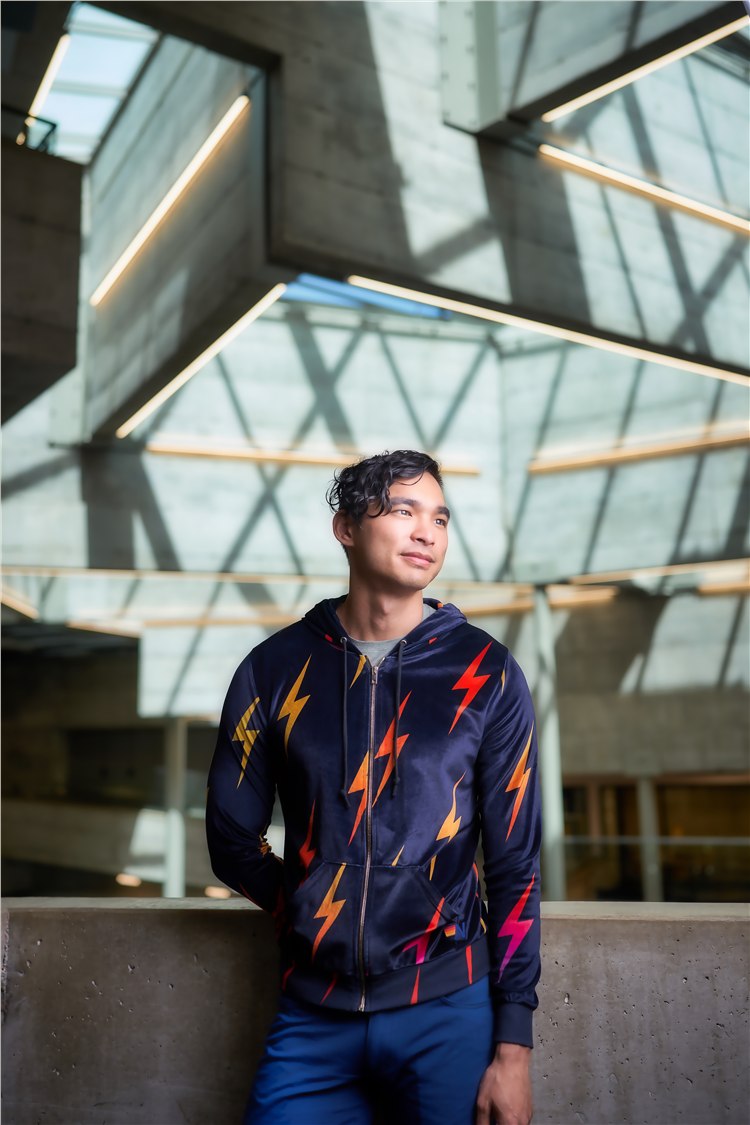
Joshua Yang is the Founder and CEO of Glyphic Biotechnologies and a Board Member of the Violet Research Institute. He is a scientist-engineer working across experimental biology, machine learning, and company building. His work starts with fundamental questions and follows their consequences into the world. He earned his MBA from Stanford Graduate School of Business, where he was the Henry Ford II Scholar (Valedictorian), and previously matriculated in the Johns Hopkins University MD–PhD program in Biomedical Engineering.